

Table of Contents
7 May 2026, London Excel
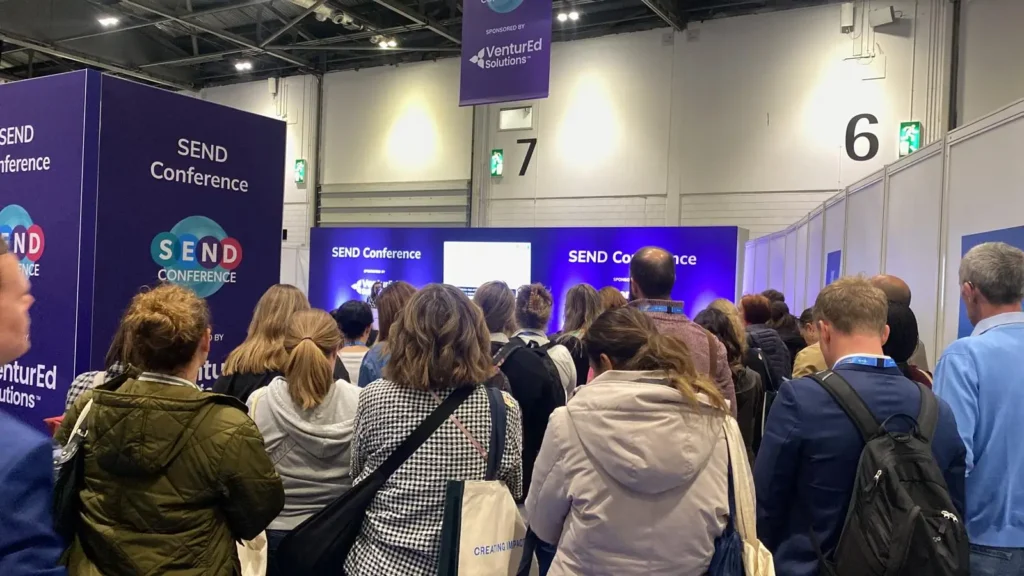
In the Chair’s Opening Address, Rebecca Fowkes from VentrEd Solutions, described the shift that each of us wants to see toward more integrated, learner-centered educational models. Models that will support better outcomes for learners with special educational needs and disabilities. Whilst much of the debate at the conference came from mainstream schools, it was clear that high quality, alternative provision, has an integral part to play in making this shift a reality. Never has there been more acknowledgement that one size does not fit all and that smaller providers, like NEC, have the agility and the flexibility to meet the challenge.
The main topics for the day centred around inclusion, safeguarding and how we can harness technology to support SEND learners and help them to get the outcomes they deserve.
Here is what I took away from the day.
Inclusion: Designing for Belonging
Data shared at the conference suggested that only 3 in 5 learners feel as though they ‘belong’ in their learning environment. Yet research shows that feeling accepted, valued and included in a community actively lowers rates of anxiety and depression. Ensuring the inclusion of all learners is, therefore, a central component of creating a culture of belonging. It was agreed that ‘belonging’ should not be sacrificed in the name of academic excellence, but creating an inclusive community of learners undoubtedly drives gains in academic achievement. A win:win!
Importantly, inclusion – sometimes a word used interchangeably with SEND learning – is being reframed as going beyond SEND. This term should encompass all barriers to engagement and should create communities where every learner feels heard and valued. One presentation demonstrated how this could be achieved by helping learners to identify with well-known role models who have themselves encountered barriers on the way to their achievements. Much can be learnt from understanding their strategies for success. A ‘taught and caught’ approach was encouraged in which educators make visible a role model’s strengths (taught) and then highlight when learners are displaying the same skills and behaviours (caught). This helps teachers to praise character strengths like resilience alongside academic achievements creating an inclusive school culture where skills and behaviours are prized as highly as knowledge and attainment.
Safeguarding: A Joined-Up Approach
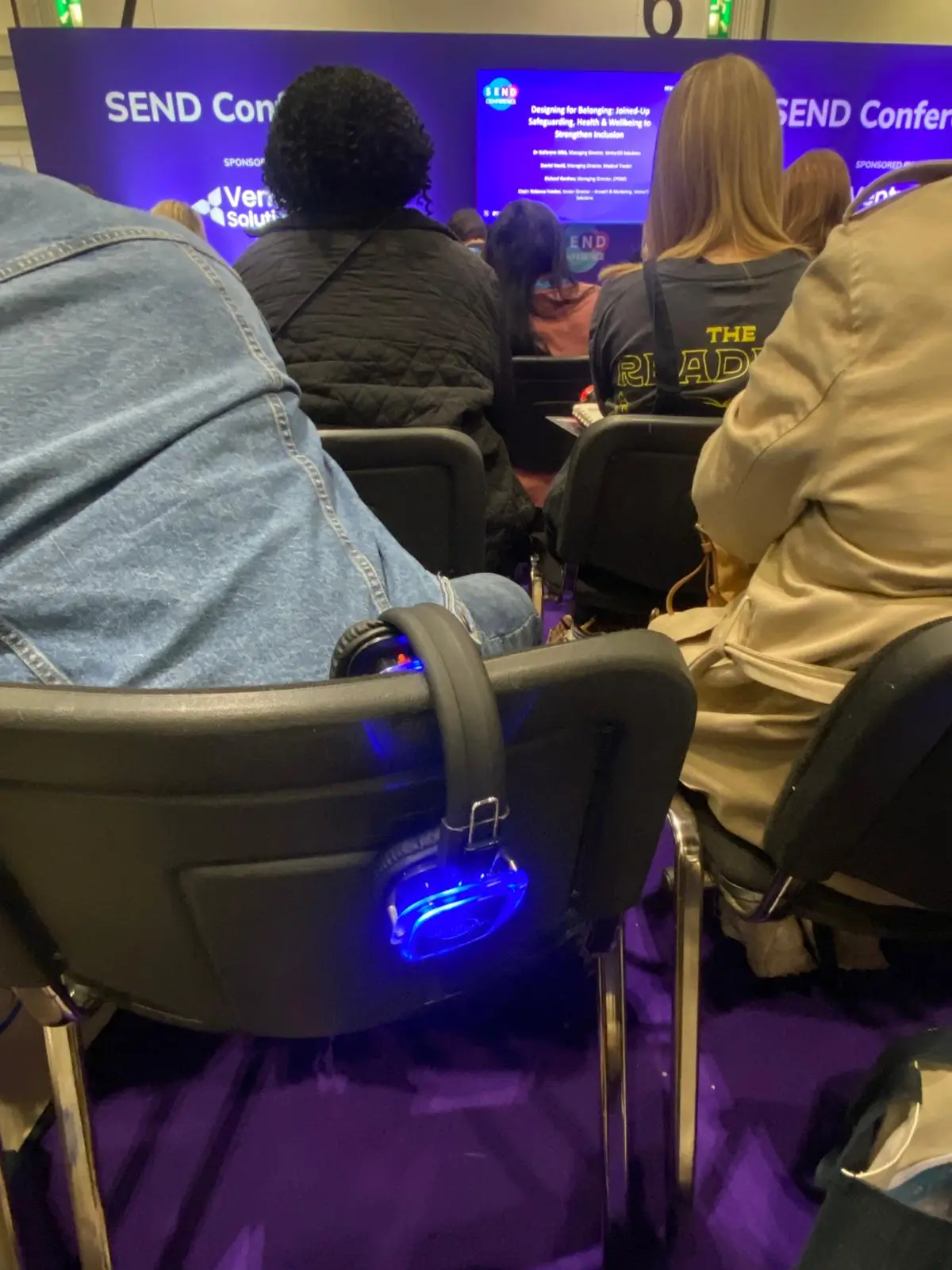
Colleagues at the conference acknowledged the need for a joined up approach across health, wellbeing and SEND support to ensure the safety of all learners. Safeguarding, after all, is not the sole province of SEND learners, and bringing learner data together from each of these areas helps to build a fuller picture of areas of need. It was suggested that edtech providers would add huge value when policy making is happening, advising on system integrations that will bring important data together. This will allow education leaders to spot patterns in information and help them to make key strategic decisions.
Another way of joining-up was around creating channels to hear more from learners around making safeguarding more effective. Student voice is seen as the best authority on how they are using technology, but also on how safeguarding processes can be set up to make them as unthreatening as possible so that the most vulnerable feel safe to access them.
Underpinning all of this was a discussion on professional development and how this, too, would benefit from being more joined-up, so that an offer can be created that is engaging, timely and relevant. Training for all staff must be specific, contextualised, and delivered in small, meaningful “drips” to keep up with the rapid pace of change.
Better Outcomes for SEND Learners
It won’t be surprising that edtech was among the solutions for improving outcomes for SEND learners. The integration of edtech and related pedagogical strategies was seen as an opportunity to drive earlier interventions and more personalised support.
Generative AI was framed as a transformative tool for accessibility, offering speech-to-text, reading assistance, and the generation of alternative resources. The ready availability of such interventions make this an equitable solution that allows schools to provide support sooner, bypassing lengthy measuring and assessment periods. In addition, tools like audiobooks and text to speech apps can help to flip the learning, front-loading input and provide the building blocks for those with dyslexia or challenges around processing speed. It was also noted that Gen AI tools are shifting the focus from the production of the final piece of work to the process involved in its creation, and the process of learning as a whole. The prompting of Gen AI can help learners to understand not just what they are learning but how they are learning it, supporting their growth as lifelong learners.
White Paper Reforms: Making it Work in Practice
It was encouraging that the conference felt like a ‘boots on the ground’ response to the aspirations of the Every Child Achieving and Thriving White Paper published earlier this year, illustrating how these strategic shifts are being interpreted and implemented by educators. This was seen in the various conference themes, reported above. However, what was clear from many of the comments and questions that came at the end of the sessions was that for these reforms to work, the system must be designed around the learner rather than around rigid policy. It is important then that policy makers also take the time to reflect on conferences such as this in which the voices of practitioners are loud and clear.
With that in mind, the Department for Education’s stand at the conference encouraged conference attendees to add their comments to a wall of feedback centred around what opportunities there might be and what targets will be harder to implement. Colleagues noted that their biggest concerns were around funding and around training for teachers, whilst collaboration was seen as the biggest opportunity, with the multi-agency approach supporting schools’ ability to meet the needs of all learners. One thing that really came across for me was that NEC’s flexible, quality provision has never been more necessary and that our ability to collaborate with parents, schools and local authorities puts us in a prime position to make a real difference.