

Course Overview
Discover how art reflects, questions, and shapes the world.
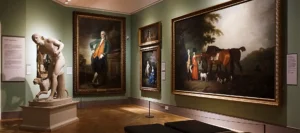
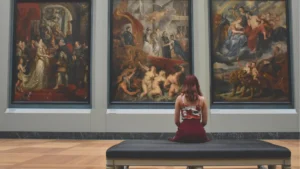
NEC’s Fast Track A level History of Art course invites you to explore how art captures history, expresses identity, and challenges ideas.
A level History of Art is a rich and inspiring subject. Our Structured Fast Track A level History of Art online course explores visual culture across time, place and perspective – focusing on how art reflects society, power, religion and identity.
Over the course of the one-year programme, you’ll study key artists, movements, and masterpieces – from classical sculpture and Renaissance painting to modern and contemporary works.
Our Structured Fast Track A level online course will develop the skills you need to analyse and interpret visual meaning and context, and is ideal if you’re aiming for a university course or a career in areas such as curation, conservation, writing, politics, law, business, design, teaching, tourism, journalism, research and more.
Designed with flexibility in mind, Structured Fast Track A level History of Art will build deep cultural awareness alongside critical thinking, visual analysis, and research skills. The online A level course includes live seminars, structured schedules, and the personal support of expert tutors – empowering you to achieve your goals, your way.
We have an exciting opportunity for state sector school/college students to access Structured Fast Track A level History of Art – FIND OUT MORE.
-

100% pass rate at Grades A* to C in 2025
-

Interactive course
-
1:1 tutor support



Register your interest in our 2026 Structured Fast Track A levels Cohort
Our Structured Fast Track A levels course enrolments are currently closed and will re-open in late Spring.
Structured Fast Track A levels are designed to enable you to complete your course within a year, and gain all the important grades you need. If you are interested in these courses and looking to enrol in 2026 and sit your exams in 2027, register your interest and we will contact you when enrolments open in late Spring 2026.
Structured Fast Track A level History of Art at a glance

Edexcel 9HT0

Although there are no academic requirements for this course, a good level of written English is required.

Exams (two):
- 50% of marks (3 hours)
- 50% of marks (3 hours)

Online learning with 1:1 tutor support.

Internet access
Computer operating system and browser to support learn@nec.
There is one Ebook included with the course:
- Thinking about Art: a thematic Guide to Art History, by Penny Huntsman, Wiley-Blackwell, ISBN: 978-1-11890-497
this text is a useful introduction to the study of art history and how to analyse works or art and architecture.
A useful critical text for the 1900-1939 period is The Shock of the New – students will receive a 20% off voucher code upon enrolment that they can choose to use on the publishers website.
Edexcel 9HT0
Internet access
Computer operating system and browser to support learn@nec.
There is one Ebook included with the course:
- Thinking about Art: a thematic Guide to Art History, by Penny Huntsman, Wiley-Blackwell, ISBN: 978-1-11890-497
this text is a useful introduction to the study of art history and how to analyse works or art and architecture.
A useful critical text for the 1900-1939 period is The Shock of the New – students will receive a 20% off voucher code upon enrolment that they can choose to use on the publishers website.
Online learning with 1:1 tutor support.
Exams (two):
- 50% of marks (3 hours)
- 50% of marks (3 hours)
Although there are no academic requirements for this course, a good level of written English is required.
Edexcel 9HT0
Although there are no academic requirements for this course, a good level of written English is required.
Exams (two):
- 50% of marks (3 hours)
- 50% of marks (3 hours)
Online learning with 1:1 tutor support.
Internet access
Computer operating system and browser to support learn@nec.
There is one Ebook included with the course:
- Thinking about Art: a thematic Guide to Art History, by Penny Huntsman, Wiley-Blackwell, ISBN: 978-1-11890-497
this text is a useful introduction to the study of art history and how to analyse works or art and architecture.
A useful critical text for the 1900-1939 period is The Shock of the New – students will receive a 20% off voucher code upon enrolment that they can choose to use on the publishers website.
Why study Structured Fast Track A level History of Art?
Our Structured Fast Track A level History of Art course has been specifically designed to follow a carefully considered 36-week study programme, providing you with the extra support you need to gain the all-important grades you require. The A level takes approximately 250-300 hours to complete, which works out at about 15-20 hours per week over the 36-week study programme.
You and a small cohort of fellow students will attend regular live seminars with your course tutor and actively engage with the subject through tutor-led forums, interactive learning activities and quality course materials.
The course is fully online and can be studied anywhere, anytime, to fit in with your lifestyle. Included within the course is a mid-course review, past-paper marking and UCAS service to make sure you are fully prepared for the exams and the next stage of your learning journey.
Course Overview
Structured Fast Track A level History of Art Course Overview
If you are curious to explore how art captures history, expresses identity and challenges ideas, our online Structured Fast Track A level History of Art course will start your journey into a fascinating subject.
This downloadable overview of the course provides a look at how studying your course on our online learning platform learn@nec works, what you will study, and the additonal support and services available to you.
Download your A level History of Art course overview today, have a look around and contact us if you have any questions about the Structured Fast Track A level History of Art course.
Once you have submitted your details the link to download your course overview will appear here.
Frequently asked questions
Your questions and concerns about Structured Fast Track A level courses. Read more FAQs.
Our Structured Fast Track A levels are designed to be studied within a 36 week period, starting in September, with a robust framework of assignments with set deadlines, live seminars, and expert tutor support.
Tutor groups will be limited in number allowing for a more personal and focused learning experience, both with the course tutor and with cohort colleagues.
An introduction to each of the Structured Fast Track courses will include quizzes that link to refresher resources to help fill in any knowledge gaps and help bridge the gap from GCSE to A level.
Live seminars led by expert tutors are scheduled throughout each course.
Support from subject expert tutors will include assignment marking, past paper marking, a mid-course review, predicted grades for UCAS applications, and UCAS references.
Studying in one year makes the course versatile for anyone looking to upskill or switch careers within a short time frame.
Students may be looking to improve on an exam grade, or add another A level qualification to help with university applications.
Students can enrol from May onwards and the course will start with a live Induction Seminar in August.
When students enrol, they will have immediate access to the Introductory Section including the interactive, adaptive Introductory quizzes which link to Refresher Topics. These will help bridge the gap from GCSE to A level and highlight any areas that might benefit from some revision.
Students will also have immediate access to Five Steps to Getting Started and About Assessment sections, so they can familiarise themselves with how to use the learning platform, and can find out about making exam applications including how our Exams team can help students who require Access Arrangements.
Students are provided with a study schedule which will include set deadlines for assignment submissions and scheduled live seminars.
The schedule includes a two week break at Christmas and some time at Easter, along with a scheduled revision time.
The schedule works out at about 15-20 hours of study per week over 36 weeks.
The live Induction Seminar will take place in August.
It will provide you with an opportunity to meet your subject tutor, the Student Support team and your fellow students.
It will also introduce you to BigBlueButton, the platform that will be used for the live seminars throughout your course.
Each course has a dedicated discussion forum where you can post questions about your course. Your fellow students and subject tutor can comment on this forum.
You also have a dedicated student-only forum where you can chat to each other.
Live seminars are timetabled throughout the course- one for each section. There is also a revision seminar towards the end of the course.
Students have the opportunity to interact with the tutor and fellow students in a supportive and friendly online environment. You do not have to have your camera on, the choice is yours.
Seminars are recorded so learners can watch them later too.
The science practical endorsement is in addition to the A level and is achieved by carrying out certain practical skills in the presence of a qualified assessor. NEC has made arrangements for the practical endorsement to be carried out and assessed at a centre(s), for an extra fee. There is more information about the practical endorsement, and how students can enter for it, in the About Assessment section of the course. Students will have access to the About Assessment section as soon as they enrol on a Structured Fast Track course
There is full guidance on all the core practicals in the course. These can be carried out at home, but where that is not possible, detailed descriptions of each investigation are provided.
Our Structured Fast Track course tutors are all subject experts and qualified teachers and have been supporting students with NEC for a number of years. They will provide detailed feedback to the assignments you submit, host the live seminars and answer questions you may have either in the seminar, via the course forum or via the messaging tool on the learn@nec platform.
Your tutor can provide a Progress Review midway through the course which will reflect on your learning and offer advice on what to concentrate on going forward.
Yes! Your course fee includes a UCAS reference and predicted grade. You will need to have submitted enough work for tutors to provide these but if you follow the schedule this is possible for the January UCAS deadline.
For students aiming for the October UCAS deadline we can provide support and advice but due to the nature of the structured course will not be able to provide a predicted grade or academic reference before this deadline. These can be sent to universities (with their agreement) at a later date.
There is a dedicated calendar on your course page that tracks assignment deadlines and seminar dates. Students can also add their own events to it and it can be exported.
If, for whatever reason, you are unable to adhere to the course schedule you do have the possibility to extend the enrolment to two years instead.
You will remain on the same course and will have access to the recorded seminars and your tutor will continue to mark assignments and provide feedback but you will no longer need to worry about sticking to set deadlines.
We have built in revision sessions and past papers as part of the course schedule.
At NEC, we understand that finding an exam centre and making sure you’re correctly entered can be stressful. That’s why we offer a guaranteed exam place for our students at one of our partnership exam centres.
By choosing to take your exams at one of our partnership exam centres you can be confident that the application process will be seamless. All of our centres work hard to provide a professional and friendly service which is valued very highly by our students.
In a traditional school or college, it can feel like exams ‘just happen’, but many distance learners who have tried organising their own exams as a private candidate soon realise that the reality is a little more complicated. Booking your exams through one of our partner centres is really simple. You just need to complete our form and we will do the rest! Booking with us allows you to concentrate fully on your studies and revision.
Student Support is a dedicated team who work to support all of our students. Students on the Structured Fast Track will have a named team member who they can contact with any non-academic queries they may have.
The Student Support team also monitors students’ progress and will keep in touch with you on a regular basis to support with overdue assignments, and remind about upcoming deadlines including those for exam bookings and UCAS applications.
Parental Communciation and Progress Tracking*
- Parents can receive updates and be contacted if there are concerns about progress or missed deadlines.
- NEC provides a clear timetable with milestone deadlines so parents can help students stay on track.
- Parents are encouraged to regularly check the student’s online course progress to support time management and motivation.
* If the student is over 18, this is done with the student’s consent.
NEC also offers a Pastoral Service to NEC students and their parents/guardians. Our expert pastoral officer and pastoral tutors can provide advice and guidance on a range of topics including study skills, timetabling, motivation, and dealing with stress and anxiety.
Affordable study
Flexible payments and financial help
- As an education charity dedicated to helping independent learners achieve life-changing qualifications we want to keep fees affordable. All of our course fees are clear and transparent to help you plan for any additional costs.
- NEC’s fees for A levels offer some of the best value on the market, with multi-buy options, special offers, personal discounts and affordable finance options.
- Used responsibly, finance is a great way to spread the cost of your course. We’ve teamed up with Omni, one of the UK’s leading finance specialists.
- Depending on your own circumstances, there are a number of possibilities for getting help to fund your course.
Visit our Fee information page or


Monthly Instalments
Study now, pay your way
It’s your choice: you can pay in full at the point of enrolment, or you can spread the cost over monthly instalments with our finance offer. We offer a choice of six or 12 monthly repayment plans, with 0% APR as standard.
To pay in instalments you will need to enrol by telephone.
The National Extension College (NEC) work with finance company OMNI. For more information on our relationship with OMNI and replayment plans see our Fee Information page.
| Course fee | £1499 |
| Deposit | £149.90 |
| Amount of credit | £1349.10 |
| Monthly payment | £112.43 |
| Duration | 12 months |
| Total repayment | £1499 |
| Cost of credit | £0.00 |
| Rate of interest | 0% APR representative |
Multibuy Structured Fast Track A levels
10% off 2 Structured Fast Track Courses using code SFTMB2
15% off 3 or more Structured Fast Track Courses using code SFTMB3
Help when you need it
Additional support for under 18s
We understand younger students often need an extra helping hand with their studies. NEC’s unique Progress Tracker makes it easy for parents and guardians to follow their child’s progress, access assignment grades and view tutor feedback to ensure effective learning.

Need help choosing?
Talk to one of our course advisors
Still unsure whether online distance learning is right for you?
Our friendly Course Advice Team are here to help answer your questions and take you through your options.
- Book a call and someone will get back to you at a convenient time.
- Or contact us today by phone or email.
We’re waiting to help you get ahead and achieve your goals, your way.

People who study Structured Fast Track A level History of Art also take…
Multi-buy Structured Fast Track A levels:
- 10% off 2 Structured Fast Track Courses (online enter code: SFTMB2)
- 15% off 3 or more Structured Fast Track Courses (online enter code: SFTMB3)

Structured Fast Track A level Biology
From tackling climate change to developing new medicines, biology is at the heart of solving real-world challenges.

Structured Fast Track A level Chemistry
From medicines to materials, A level Chemistry is the gateway to understanding how the world works at a molecular level — and essential for a wide range of science-based careers.

Structured Fast Track A level Maths
Whether you’re aiming for a STEM degree, a career in finance, or simply love the challenge of numbers, A level Maths is the gateway to a wide range of opportunities.

Structured Fast Track A level Physics
Physics is the key to understanding the universe — from building better technologies to unlocking the secrets of time, energy, and space

Structured Fast Track A level Psychology
From memory and attachment to phobias and social influence, A level Psychology helps you better understand yourself — and the world around you.