
Table of Contents
TLDR
Hadestown brings the ancient Greek myths of Orpheus and Eurydice, Hades and Persephone to a modern audience through music and theatre. NEC’s A level Classical Civilisation tutor Diane explores the Greek mythology, theatre, religion, politics and art behind the musical – and explains why Hadestown is a powerful example of how the classical world continues to influence the stories we tell today.
It’s a fantastic year for fans of the Classics, and Classical Greece in particular. Following the excitement back in the Summer when Christopher Nolan’s The Odyssey premiered in cinemas, Classics enthusiasts unable to get to the West End stage show can now enjoy watching Hadestown in their local cinema.
The National Extension College’s (NEC) online A level Classical Civilisation course tutor Diane – who back in July co-authored our blog explaining why The Odyssey film had been so eagerly anticipated – is back with a look at why Hadestown is relevant for classical civilisation students today.
Over to Diane.
__________________________________________________
Why Hadestown Shows That the Classical World is Still Relevant Today
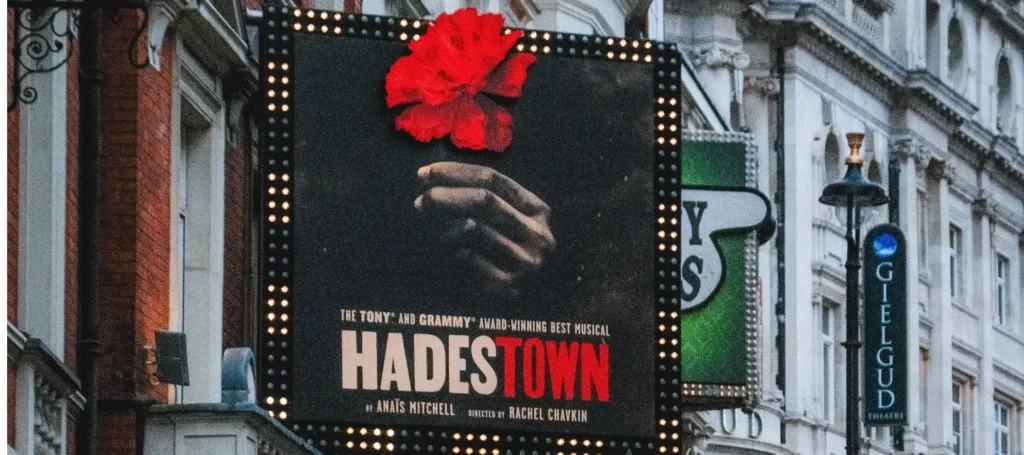
Tuesday 13th October 2026 saw the UK release of the pro shot of Hadestown, Anaïs Mitchell’s award-winning retelling of the myth of Orpheus and Eurydice. Needless to say, I was first in the queue at our local cinema to buy my ticket!
I have been lucky to have seen the live production in London several times since it debuted in 2024 and I had been enjoying the music for many years before that. An avid musicals fan, this particular show is my favourite for many reasons, one being that it demonstrates how ancient stories continue to inspire contemporary audiences and artists. For students considering A level Classical Civilisation, it offers the perfect example of why the classical world remains fascinating, relevant, and influential today.
Hadestown and Greek Mythology: Orpheus, Eurydice, Hades & Persephone
Ancient Myths on the Modern Stage
At its heart, Hadestown draws directly from Greek mythology. The tragic love story of Orpheus and Eurydice is one of the most enduring myths of the ancient world. The show also tells the tale of the marriage of Hades and Persephone and how this led to the creation of the seasons.
Rather than presenting mythology as something frozen in the past, A level Classical Civilisation encourages students to ask why these stories still matter. Hadestown shows that themes explored by the Greeks over two thousand years ago continue to resonate with modern audiences. Questions about love, trust, power, hope, and human suffering remain just as relevant today as they were in antiquity.
How Hadestown Draws on Ancient Greek Theatre and Art
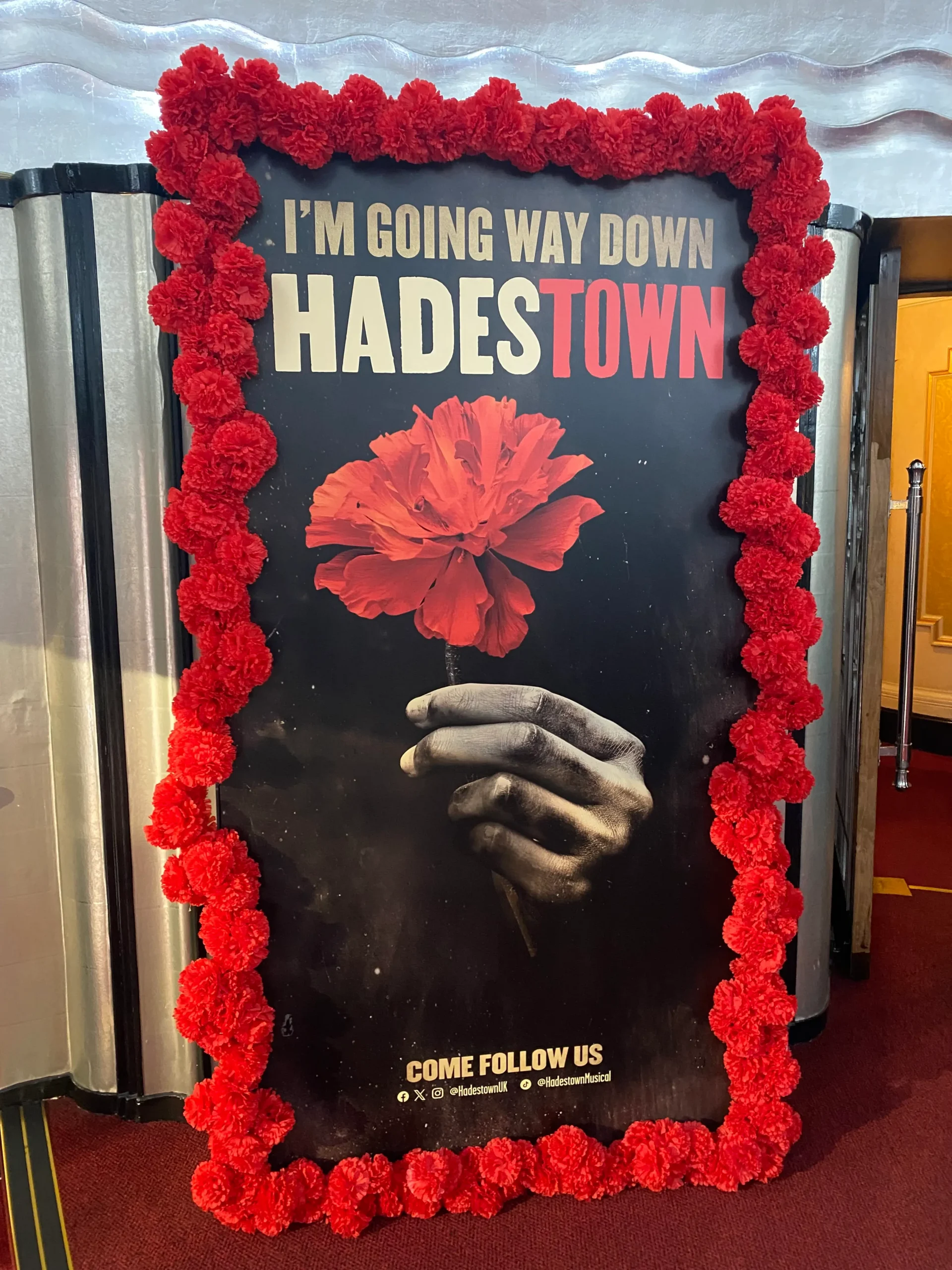
We study the Greek theatre in the A level, and the set of Hadestown draws clear influence from the ancient theatre, with its round stage where the chorus dance and sing and the fates play their musical instruments. There are many subtle nods to this influence that Classics students may spot, one such being Orpheus and Eurydice reclining together in the same pose as the Etruscan funerary Sarcophagus of the Spouses during the number Way down Hadestown.
Getting enough to eat and survival is a theme in Hadestown; as dining imagery was in Etruscan funerary art. This song and choreography bring the two together in secret poignancy and just after this number, Persephone returns to Hadestown and there occurs a Gathering Storm and winter returns and with it, Eurydice’s deal with Hades and her ‘death’.
Look out too for Hades’ snake skin boot.
Patrick Page (who plays Hades) ruptured his Achilles before the recording of the pro shot and wears a medical boot – cunningly adapted into his costume. The effect of this made his movements around the stage rather sinister and snake like, enhancing Hades dark and complex character.
Greek Gods and Religion in Hadestown
One of the most exciting aspects of A level Classical Civilisation is the opportunity to study the relationship between mortals and the gods. In Hadestown, Hades and Persephone are not distant divine beings but complex characters whose actions shape the lives of ordinary people.
Students studying Greek religion examine how the ancient Greeks viewed their gods, how divine power influenced everyday life, and what myths reveal about human beliefs and fears.
Comparing the traditional versions of these myths with their portrayal in Hadestown provides an excellent way of understanding how modern creators adapt ancient material to speak to contemporary concerns. Read the Homeric Hymn to Demeter which describes Persephone’s abduction and marriage to Hades. This is no love story, but one of coercion, but in both accounts, Hades attempts to keep his bride with promises of wealth and status, and in both accounts, Persephone views her life of sunlight and song as more desirable.
Politics, Power and Society in Hadestown
Beyond mythology, Hadestown raises significant questions about authority, inequality, and control. Hades’ industrial underground kingdom can be interpreted as a commentary on labour, wealth, and political power.
These themes connect closely with the wider study of the classical world. A level Classical Civilisation explores how ancient societies were organised, how power was exercised, and how writers and thinkers responded to political challenges. Students learn to analyse and evaluate differing viewpoints, developing critical thinking skills that are highly valued by universities and employers.
How Hadestown Connects Literature, Theatre, Art and the Ancient World
And How A level Classical Civilisation Does Exactly the Same Thing!
Classical Civilisation is uniquely interdisciplinary. It combines literature, history, religion, philosophy, art, and archaeology. Students analyse ancient texts, examine material culture, and debate complex ideas about human nature and society.
Hadestown itself reflects this interdisciplinary approach. To fully appreciate the musical, audiences engage with literature, music, performance, mythology, and cultural interpretation. The same breadth makes Classical Civilisation an engaging and varied A level, offering something for students with interests in humanities, the arts, drama, or history.
Why Study A level Classical Civilisation?
If Hadestown has shown us anything, it is that the ancient world is far from dead. Greek myths continue to inspire award-winning theatre, bestselling novels, films, television series, and popular culture. By studying A level Classical Civilisation, students gain a deeper understanding of the stories that continue to shape our world.
The myths may be ancient, but the questions they raise are timeless. Why do people trust? How should power be used? What gives life meaning? Why do stories endure?
These are the questions explored in both Hadestown and A level Classical Civilisation. If you want a subject that combines fascinating stories, challenging ideas, and enduring relevance, Classical Civilisation may be the perfect choice.
“It’s an old song,” the narrator, Hermes Psychopompos tells us in Hadestown, “and we’re gonna sing it again.”
Classical Civilisation invites students to discover why we keep returning to these ancient stories, and what they still have to teach us today.
__________________________________________________
Study A level Classical Civilisation Online With NEC
If Diane has piqued your interest in discovering more about the ancient world, take a look at NEC’s online A level Classical Civilisation course, and start your own study of the ancient world.
If you have any questions, get in touch with our friendly Course Advice Team with any questions.
Henry, Jo and Will are just three of our students who have studied A level Classical Civilisation with NEC – you can read their stories below.