

Extend what’s possible
For more than 60 years, the National Extension College (NEC) has been extending educational opportunities beyond the boundaries of traditional education: giving people the flexibility, support
and choice to learn in a way that works for them.
99
%Pass rate
95
+Courses
750
KStudents taught
60
+Years experience
The Invisible College
A Vision Born in Cambridge
A college for people who couldn’t turn up
In 1963, social innovator Michael Young and Brian Jackson set up the National Extension College in Cambridge. They called it “the invisible college“: a place for people who couldn’t sit in a classroom because of work, family or circumstance.
It was also a test run for something bigger. NEC piloted the ideas that went on to shape the Open University.
People who must study in odd moments

Meet our founders:
Michael Young
Michael Young (1915–2002) had a gift for turning ideas into organisations. “I can’t stop them, they’re flowing in like a flood all the time,” he said in 1995. A sociologist and social innovator, he drafted Labour’s 1945 election manifesto, Let Us Face the Future, and set up the Institute of Community Studies, now part of the Young Foundation. He also helped found the Consumers’ Association, publisher of Which?, and wrote The Rise of the Meritocracy, a satire still quoted in debates about fairness today.
Education was never far from his mind. In 1962 he called for a “University of the Air“, and a year later he founded NEC to show how it could work, helping to pave the way for the Open University. He went on to co-found the University of the Third Age, for learning in later life, and the School for Social Entrepreneurs. By the end of his life, he had helped start more than 40 organisations and sat in the House of Lords as Lord Young of Dartington.
He saw failure as a chance to learn and was always onto the next idea. NEC is still part of the Open School Trust, the charity he founded, and his belief that education should fit around people’s lives still guides everything we do.
About NEC's students in 1965

Meet our founders:
Brian Jackson
Brian Jackson (1932–1983) knew first-hand what a second chance could mean. Born in a back-to-back house in Huddersfield, he won a place at Cambridge and became a primary teacher, then a sociologist. His 1962 book Education and the Working Class, written with Dennis Marsden, followed working-class children through grammar school and showed how often the system let them down.
With Michael Young, he co-founded the Advisory Centre for Education in 1960 and NEC three years later, becoming its first director. In 1964 he launched College of the Air with Anglia Television, using TV to link students studying by post with their tutors. He went on to found the National Children’s Centre in Huddersfield, and died in 1983, aged 50, while running a charity race to support it.

Small beginnings, big response
NEC started with one paid employee, David Grugeon, who began work on 12 August 1963. The money came from a modest Gulbenkian Foundation grant and donations from Guardian readers. The first office was a rented shed.
People came anyway. Within eight weeks, 3,000 had applied. One of the very first courses taught them how to build their own radio.
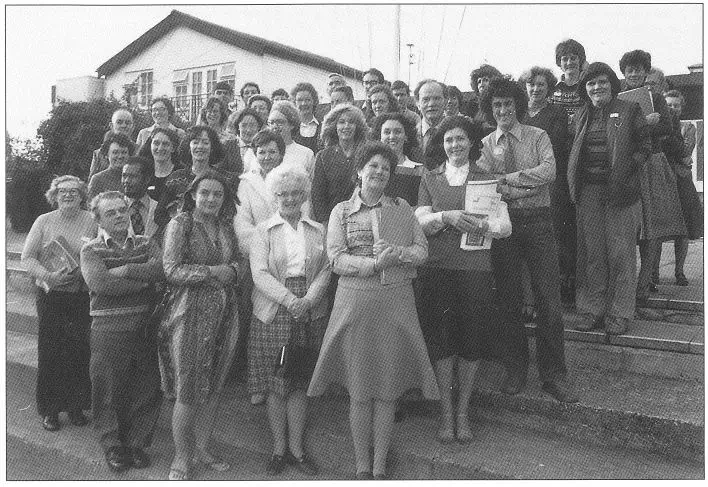
Image: 18 Brooklands Avenue, NEC’s home from 1979-2000
Reaching people where they are
Michael Young believed no single method would reach everyone, so NEC mixed post, print, radio, television and personal tutors. “A combination of means of communication will be superior to any one on its own,” he wrote in 1963.
Dawn University, 1963
Five lectures on Anglia Television, broadcast at 7.15am. 250,000 people tuned in.
After School English, 1964
Piloted on BBC Midlands radio, then broadcast nationally to more than 200,000 listeners. David Grugeon interviewed six people to present it. At the end of the day, the producers told him they’d found their presenter: him. He did it for five years.
A gateway to university, 1968
Courses like Reading to Learn and Square 2 prepared adults for the new Open University. By the 1970s, 40% of NEC’s correspondence came from these courses.
30-Hour BASIC, 1982.
Written alongside the BBC Computer Literacy Project, it became NEC’s first bestseller, selling an estimated 150,000 to 250,000 copies.
Learning in prison, since 1972
Print-based courses that reach people where online learning can’t.


A charity, not a business
NEC was set up as a not-for-profit in 1963, and it still is one. Today we’re an independent educational charity, part of the Open School Trust, which Michael Young founded.
That shapes how we work:
- Fees cover costs, not profit. We set them on a cost-recovery basis so courses stay affordable.
- Any surplus goes back to learners, into new courses, better learning technology and student support.
- Trustees, not shareholders. A Board of Trustees guides NEC, chaired since 2025 by Dr Vanessa Pittard.
It’s been that way from the start. A Gulbenkian Foundation grant and donations from Guardian readers paid for the first courses. In 2013, our 50th year, we launched the Future From 50 appeal to fund new courses.
Our mission hasn’t changed: to make quality education available to everyone, anywhere, at any time.
The future is education
Our Story in Milestones
1963 – The invisible college
Founded in Cambridge by Michael Young and Brian Jackson as a pilot for an open university.
1964 – On air
After School English launches on BBC radio. NEC takes over the University Correspondence College.
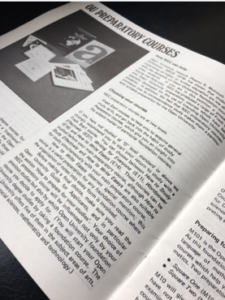
1968 – A gateway to university
Gateway courses prepare adults with no formal qualifications for Open University study.
1971 – A Nobel-winning chair
Physicist Sir Nevill Mott becomes Chair of Trustees, a role he holds until 1976. A year later, he wins the Nobel Prize for Physics.
1977 – Learning closer to home
FlexiStudy lets learners study NEC courses through their local college, with local authority support. By 1986, 179 colleges had joined.
1980s – Skills for a changing economy
30-Hour BASIC with the BBC, Be Your Own Boss as unemployment hits three million, and training for 4,000 BT technicians.
1988 – 25 years, 250,000 learners
NEC welcomes its 250,000th student. To mark its 25th anniversary, it holds Open Learning in Transition, an influential national conference, alongside a book of the same name edited by trustee Nigel Paine.
1996 – Passing the driving theory test
When the driving theory test becomes compulsory, NEC publishes a handbook to help learners pass.
1997- Learning at work
As more employers invest in work-based learning, NEC develops courses for staff at companies including Coca-Cola.
1999 – 10,000 new learners a year
More than 10,000 new students now enrol every year. NEC also buys a site on Purbeck Road, which becomes the Michael Young Centre in 2000.
Early 2000s – 20,000 learners a year
NEC now teaches more than 20,000 students a year.
2011 – Back from the brink
After a failed merger, NEC is rescued through the Open School Trust, founded by Michael Young, with support from NIACE.
2013 – 50 years, new learners
A new service supports home educating families and younger learners.
2017 – Bursaries for Big Issue vendors
NEC offers bursaries so Big Issue vendors can study for a qualification.
2019-20 – Fast Track A levels
Structured Fast Track A levels launch in biology, chemistry, maths and physics.
2020 – History of Art goes online
Working with the Association for Art History, NEC launches A level History of Art, giving students a new way to study a once-endangered subject.
2022 – More support for students
Comedian and former NEC student Russell Kane launches a scholarship funding GCSEs, A levels and exam fees for learners held back by disadvantage. A new pastoral care service also supports students’ wellbeing.
2023 – 60 years of second chances
NEC turns 60 and celebrates with a bursary for a lifelong learner looking to return to work or change career.
2025 – A new chapter
Dr Vanessa Pittard becomes Chair of Trustees. NEC launches a structured one-year GCSE programme, an improved learn@nec platform, a new website and a refreshed brand.
2026 – New commitments, a lasting legacy
NEC signs the Care Leaver Covenant to help care-experienced people access learning. Former chief executive Ros Morpeth steps down from the Board after nearly 40 years, and the first Dr Ros Morpeth Award is presented in her honour.

Resilient through every challenge
In more than 60 years, NEC has faced strikes, curriculum overhauls, funding pressures and a pandemic. Each time, we adapted and kept our students learning.
- When qualifications changed (1980s–2000s). O levels gave way to GCSEs, then Curriculum 2000 reshaped A levels. NEC rewrote its courses each time, producing more than 16,000 pages of new material for the A level changes alone.
- When the organisation changed (2011). After a short-lived merger came to an end, NEC joined the Open School Trust, the charity Michael Young founded, and students carried on studying.
- When the country locked down (2020–21). Our students already studied online, so they saw virtually no disruption. We kept enrolling, shared free resources for families and teachers, and as an exam centre provided tutor-assessed grades when exams were cancelled.
- When learners’ needs changed (2022 onwards). As more younger students joined after the pandemic, we launched a Pastoral Care Service and a Wellbeing for Learning programme.
That steadiness is why students, parents and schools can rely on NEC to be here.

Education without borders: partners and impact
Prisoners’ Education Trust: NEC has supported learners in prison since 1972. Working with the Prisoners’ Education Trust, we adapt our courses into print so people can study without internet access. Popular choices include [Business Start-Up and Creative Writing]. For many, it’s a first qualification and a step towards life after release.
The Open University and learning partners: We share our roots with the Open University. Today we work with [UnionLearn, the WEA, UCAS and the Learning and Work Institute] to open up routes into higher education and work.
Our education partners
Our partnerships with other educational bodies has continued to grow over the years.


Our trustees
NEC is part of the Open School Trust, an educational charity guided by a board of trustees.
Each bringing a unique set of experience and skills to the charity, the trustees are responsible for guiding NEC’s overall direction and meet regularly to discuss how to further its work.
Our courses
Explore and find the right course for you
Explore a wide range of courses tailored to meet various learning needs and career goals. Whether you’re advancing in your current field, exploring a new interest, or continuing your education, we have the programmes to help you reach your aspirations.